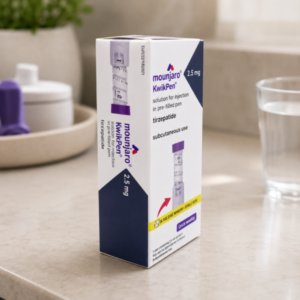
Semaglutide (Ozempic, Wegovy) and tirzepatide (Mounjaro, Zepbound) are the two leading medications for combating obesity and type 2 diabetes. While both belong to the GLP-1 receptor agonist class, they differ fundamentally in their mechanism of action, efficacy, side effect profiles, and cost. Here’s how they compare.
How Do They Work Differently?
The key difference lies in the number of hormonal pathways each drug targets.
Semaglutide is a single GLP-1 receptor agonist. It mimics the glucagon-like peptide-1 hormone, which stimulates insulin production, slows gastric emptying, and reduces appetite by signaling fullness to the brain .
Tirzepatide is a dual agonist. It targets both the GLP-1 receptor and the glucose-dependent insulinotropic polypeptide (GIP) receptor . The GIP hormone also stimulates insulin release after eating. Research suggests this dual action enhances its metabolic benefits, including greater weight loss and blood sugar control . This dual mechanism also helps explain why tirzepatide has been shown to more robustly activate brown adipose tissue for fat burning .
| Feature | Semaglutide (Ozempic/Wegovy) | Tirzepatide (Mounjaro/Zepbound) |
|---|---|---|
| Mechanism | Single GLP-1 receptor agonist | Dual GIP and GLP-1 receptor agonist |
| Dosing Form | Weekly injection; also available as daily oral pill | Weekly injection only |
| Max Dose | 2.4 mg weekly (Wegovy) | 15 mg weekly |
Which Is More Effective for Weight Loss?
Clinical trials consistently show that tirzepatide produces greater weight loss than semaglutide .
-
A head-to-head trial found that participants on tirzepatide lost 22.8 kg (50.3 lbs) on average compared to 15.0 kg (33.1 lbs) for those on semaglutide over 72 weeks—a 47% greater relative weight loss .
-
Another study comparing the two over 12 months found a mean weight loss of 11.4% with tirzepatide versus 6.2% with semaglutide .
-
A large real-world study analyzing over 135,000 patients found that tirzepatide (Mounjaro/Zepbound) had significantly higher odds of producing “super-response” (>15% weight loss) compared to semaglutide .
Expert opinion from the Cleveland Clinic notes: “Typically, tirzepatide is superior for glucose-lowering and for weight loss” .
Side Effects and Safety Comparison
Both medications share similar safety profiles, with gastrointestinal (GI) side effects being the most common .
Gastrointestinal Effects:
-
The most frequent side effects for both drugs are nausea, vomiting, diarrhea, and constipation .
-
A large real-world study found that semaglutide and tirzepatide have similar rates of severe GI adverse events, including acute pancreatitis, biliary disease, and bowel obstruction .
-
However, some emerging research suggests potential tolerability differences. One real-world study indicated that Zepbound (tirzepatide) super-responders had lower rates of post-treatment vomiting compared to Wegovy (semaglutide) super-responders, who showed significant increases in vomiting .
Serious Risks:
-
Both drugs carry warnings for rare but serious risks, including thyroid tumors (medullary thyroid cancer), acute pancreatitis, gallbladder disease, and hypoglycemia .
-
They are contraindicated in individuals with a personal or family history of medullary thyroid cancer or multiple endocrine neoplasia syndrome type 2 .
Muscle and Nutritional Concerns:
-
Real-world data shows that both drugs can lead to protein-energy malnutrition in some patients, particularly super-responders, highlighting the importance of monitoring lean mass and nutritional intake during treatment .
Cardiovascular and Other Benefits
The two drugs may offer distinct benefits beyond weight loss.
-
Semaglutide has demonstrated robust cardiovascular protection and is specifically approved to reduce cardiovascular risk in adults with type 2 diabetes and established heart disease .
-
Tirzepatide may offer broader metabolic benefits, including potentially superior effects on inflammation and bone remodeling, according to some studies . It is also approved for moderate-to-severe obstructive sleep apnea in adults with obesity .
Cost Comparison
Cost is a significant factor for many patients.
-
Brand-name retail pricing: Without insurance, Ozempic typically costs between $800–$1,000 per month, while Mounjaro is more expensive, ranging from $950–$1,350 per month .
-
Compounded options: Compounded versions are available at lower price points, with compounded semaglutide starting around $149/month** and compounded tirzepatide around **$249/month . This represents significant savings compared to brand-name drugs.
-
Insurance coverage: Coverage varies widely and often requires prior authorization, with copays typically ranging from $100–$500 per month .
Which One Is Right for You?
The choice between these two medications depends on individual health goals, medical history, and cost considerations.
Tirzepatide is generally the more powerful option for weight loss, making it a strong choice for patients who need to lose a significant amount of weight .
Semaglutide offers proven cardiovascular protection and may be preferred for patients with established heart disease . It also has the convenience of an oral tablet formulation .
As one expert notes, both drugs require patients and clinicians to reconceptualize obesity as a chronic disease needing ongoing pharmacological management . The best choice should be made in consultation with a healthcare provider who can assess your specific risk factors, goals, and tolerance for side effects.
You can buy Mounjaro / Tirzepatide without prescription at www.teslarxgear.com